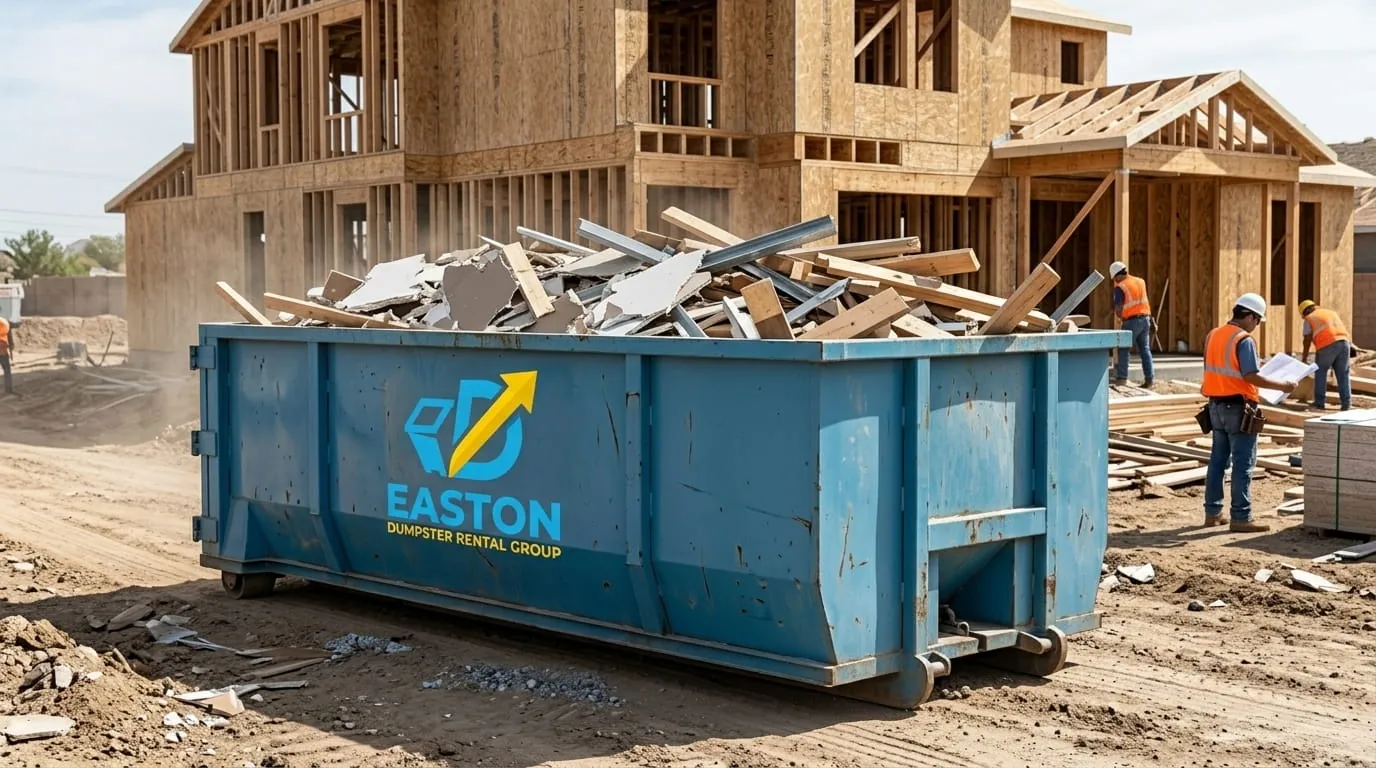
I've been dropping roll-offs on job sites around Easton and the greater Lehigh Valley long enough to know one thing for certain: the disposal part of a project is where budgets quietly bleed out. Not the framing. Not the finish work. The debris. A crew will spend three weeks obsessing over trim reveals and then throw everything into one bin like it's a landfill on wheels. Then the invoice lands, the overage charges hit, and everyone's surprised.
It doesn't have to go that way. Construction and demolition debris (the industry calls it C&D) is predictable stuff. If you understand what you're throwing away, how much it weighs, and where it's legally allowed to go, you can cut your disposal costs and keep your site clean and compliant at the same time. Let me walk you through how we actually do it.
Know Your Streams Before You Fill a Bin
The single biggest mistake I see is treating debris as one undifferentiated pile. It isn't. C&D breaks into a handful of distinct material streams, and each one behaves differently at the transfer station and on the scale.
Wood. Framing lumber, sheathing, pallets, old subfloor. Clean, untreated wood is one of the most recyclable materials on a job site. Ground into mulch or biomass fuel, it often costs less to dispose of than mixed trash. The catch is contamination: painted, stained, or pressure-treated wood (the greenish stuff) is a different animal and usually can't ride in the clean-wood stream.
Drywall. Gypsum board is light in small amounts and brutal in volume. A gut of a single bathroom won't move the needle. Re-rocking an entire house will. Drywall also holds moisture, so if it sits out in a Lehigh Valley rainstorm before pickup, it gets heavier by the hour. New scrap drywall (clean gypsum) can sometimes be recycled; demolition drywall with paint, tile mastic, and old adhesive typically can't.
Metal. This is the one material that can pay you back. Copper wire, steel studs, HVAC ductwork, aluminum flashing, old rebar, cast-iron tubs. Scrap metal has real value, and separating it out of your debris keeps weight (and cost) out of your dumpster while potentially earning a scrap check. Never bury metal in a mixed load if you can help it.
Roofing. Asphalt shingles are the sleeper heavyweight of the debris world. A single square of tear-off can run 250 to 400 pounds depending on how many layers are up there. A modest roof will fill and max out a bin on weight long before it looks full. I'll come back to this, because roofing is exactly where the right container choice saves you real money.
Concrete, brick, and block. The dense stuff. Broken sidewalk, footings, foundation chunks, patio slab, masonry. This material is so heavy that it needs its own conversation entirely, which is the next section.
Roll-Off vs. Dedicated Heavy-Debris Bin
Here's the distinction that trips up most homeowners and even some contractors. A standard roll-off dumpster is built for volume. A dedicated heavy-debris bin is built for weight. They are not interchangeable, and using the wrong one is how you end up with a container you're not allowed to legally haul.
A typical mixed-debris roll-off (think 20 or 30 yard) is perfect for a bathroom remodel, a garage cleanout, a deck teardown, or a whole-house renovation where you've got a mix of wood, drywall, carpet, insulation, and general construction trash. Lots of bulk, moderate weight. You're filling it up in cubic yards.
But the moment your debris is concrete, brick, block, dirt, asphalt, or roofing shingles, you've entered heavy-debris territory. That material will exceed the safe and legal transport weight of a large open bin before you've filled a third of it. That's why we run smaller, purpose-built containers (often a 10-yard) for that work. For those loads we point people toward a dedicated concrete and heavy-debris bin sized for the weight rather than the volume. Trying to cram a busted patio into a 30-yard roll-off isn't ambitious, it's a truck that can't legally leave your driveway.
For general renovation and demolition work, our construction dumpster rentals handle the mixed streams cleanly. The trick is matching the container to what's actually going in it, and that's a two-minute phone conversation that saves hours of headache.
Weight Limits and Why Debris Type Dictates Size
Every dumpster comes with a weight allowance, usually expressed in tons, included in the base rate. Go over it, and you pay per-ton overage. This is where understanding your material pays off, because volume and weight rarely fill up at the same rate.
Consider two 20-yard bins. Fill one with clean framing lumber and construction scrap and you might come in at two or three tons. Fill the same bin with roofing shingles and you could be staring at seven or eight tons. Same box, wildly different scale ticket. The mistake is picking a size based on how big the pile looks in the yard instead of how much it weighs.
My rule of thumb: for light, bulky material (wood, drywall, cabinetry, general trash) go bigger, because you'll run out of space before you run out of weight. For dense material (concrete, dirt, roofing, tile, masonry) go smaller and expect to fill it only partway. A half-full heavy bin is not you wasting space. It's you staying under the axle limit.
If you're ever unsure, don't guess. Call us at (484) 544-4458 and describe the job. We size hundreds of these a year across the Lehigh Valley, and getting it right the first time is free.
Pennsylvania Disposal Rules, in Plain English
Pennsylvania takes waste disposal seriously, and the DEP has real rules about where C&D can go. You don't need to memorize the regulations, but you should know the shape of them.
First, C&D debris has to go to a permitted facility, whether that's a C&D landfill, a transfer station, or a recycling facility. You cannot legally bury it on site, burn it, or dump it down a bank. That last one still happens in rural corners of the county and it's both an environmental violation and a fast way to earn a fine you'll remember.
Second, certain materials are banned from ordinary C&D disposal entirely. Asbestos is the big one, and it's common in older Easton housing stock. Popcorn ceilings, old floor tile, pipe insulation, and certain siding in pre-1980 homes can all contain it. If you suspect asbestos, stop and get it tested. Handling and disposing of it requires a licensed abatement contractor, full stop. It cannot go in your dumpster.
Other prohibited items include liquid paint (dry it out or take it to a recycling event), tires, batteries, appliances with refrigerants (fridges, AC units, freezers), fluorescent bulbs, and any hazardous chemicals. These have separate disposal channels. When in doubt, ask before you toss.
Third, keep loads level. PA transport law means we can't legally haul a bin heaped over the rails. Fill to the fill line, not to a mountain peak.
Keeping the Job Site Safe and Compliant
Debris management isn't just about the dumpster. It's about the whole site. A pile of loose material with nails sticking up is an OSHA violation waiting to happen and a lawsuit waiting for a homeowner who wanders over to look at progress.
Stage your debris. Set up your separated streams before demo starts, not after. A designated corner for metal, a spot for clean wood, the bin itself for mixed trash. When workers know where things go, the site stays walkable and the sorting is done as you go instead of in a miserable afternoon at the end.
Keep the dumpster accessible but out of the traffic path, and put plywood down under the wheels if you're worried about the driveway. Don't overfill (see the fill line, again). And keep a magnetic sweeper or at least a rake handy for the nails, screws, and staples that end up everywhere on a demo job. Flat tires and puncture wounds are the two most common site injuries I hear about, and both are entirely preventable.
Recycle the Clean Stuff (It Pays)
This is the part people skip and shouldn't. Clean, separated material is worth more, or costs less, than mixed debris. Every ton you divert from the landfill is a ton you might not pay landfill tipping fees on.
Clean concrete and masonry can be crushed and reused as aggregate or fill. Scrap metal has cash value at any yard in the valley. Untreated wood becomes mulch or fuel. Clean gypsum can be recycled back into new drywall or used as a soil amendment. Cardboard from all those material deliveries recycles curbside or in its own stream.
The economics are simple: sorting takes labor up front but saves money at the scale. On a large project, the difference between one mixed load and three sorted streams can be hundreds of dollars, plus you're doing right by the environment, which matters more to clients every year.
The Bottom Line
Disposing of construction debris the right way comes down to four habits: know what you're throwing away, match the container to the material's weight and not just its bulk, keep the banned stuff out, and separate what you can recycle. Do those four things and the disposal side of your project stops being a surprise and starts being a line item you actually control.
If you've got a project coming up in Easton or anywhere in the Lehigh Valley and you're not sure what you need, reach out. We'll help you figure out the right container the first time. Give us a call or get in touch here, and let's keep your job site clean, safe, and under budget.
Founder, Easton Dumpster Rental Group — sharing straight advice from more than 15 years of local hauling experience.
Frequently Asked Questions
Can I put concrete and general construction trash in the same dumpster?
It's not a good idea. Concrete, brick, and masonry are dense enough to exceed a container's legal transport weight long before it looks full, while general trash fills on volume. Mixing them means you pay for a large bin you can only partially fill and risk overage charges. Use a dedicated heavy-debris bin for concrete and a standard roll-off for mixed construction trash. If you're unsure how to split a job, call us at (484) 544-4458.
What construction materials are banned from a regular dumpster in Pennsylvania?
Asbestos is strictly prohibited and requires a licensed abatement contractor, which matters a lot in older Easton homes. Also banned from ordinary C&D disposal are liquid paint, tires, batteries, appliances with refrigerants like fridges and AC units, fluorescent bulbs, and any hazardous chemicals. These all have separate disposal channels. When in doubt, ask before you toss it in the bin.
How do I know what size dumpster I need for a renovation?
Match the size to the material's weight, not just how big the pile looks. For light, bulky debris like wood, drywall, and cabinetry, go bigger because you'll run out of space before weight. For dense material like roofing, tile, or concrete, go smaller and expect to fill it only partway to stay under the weight limit. Describe your job to us and we'll size it right the first time.
Is it worth separating recyclable materials on a job site?
Yes, especially on larger projects. Clean concrete, scrap metal, untreated wood, and clean gypsum can all be recycled or reused, often at lower cost than landfilling mixed debris, and scrap metal even has cash value. Sorting takes some labor up front but the savings at the scale can add up to hundreds of dollars on a big job, plus it keeps material out of the landfill.
What happens if I overload a dumpster?
An overloaded bin can't legally be hauled in Pennsylvania. Loads must sit level with the container rails, not heaped over them, and must stay under the axle weight limits for transport. If a bin is overfilled or too heavy, the driver may not be able to take it until it's brought down, which costs you time. Fill to the fill line and keep dense material in a properly sized heavy-debris container.