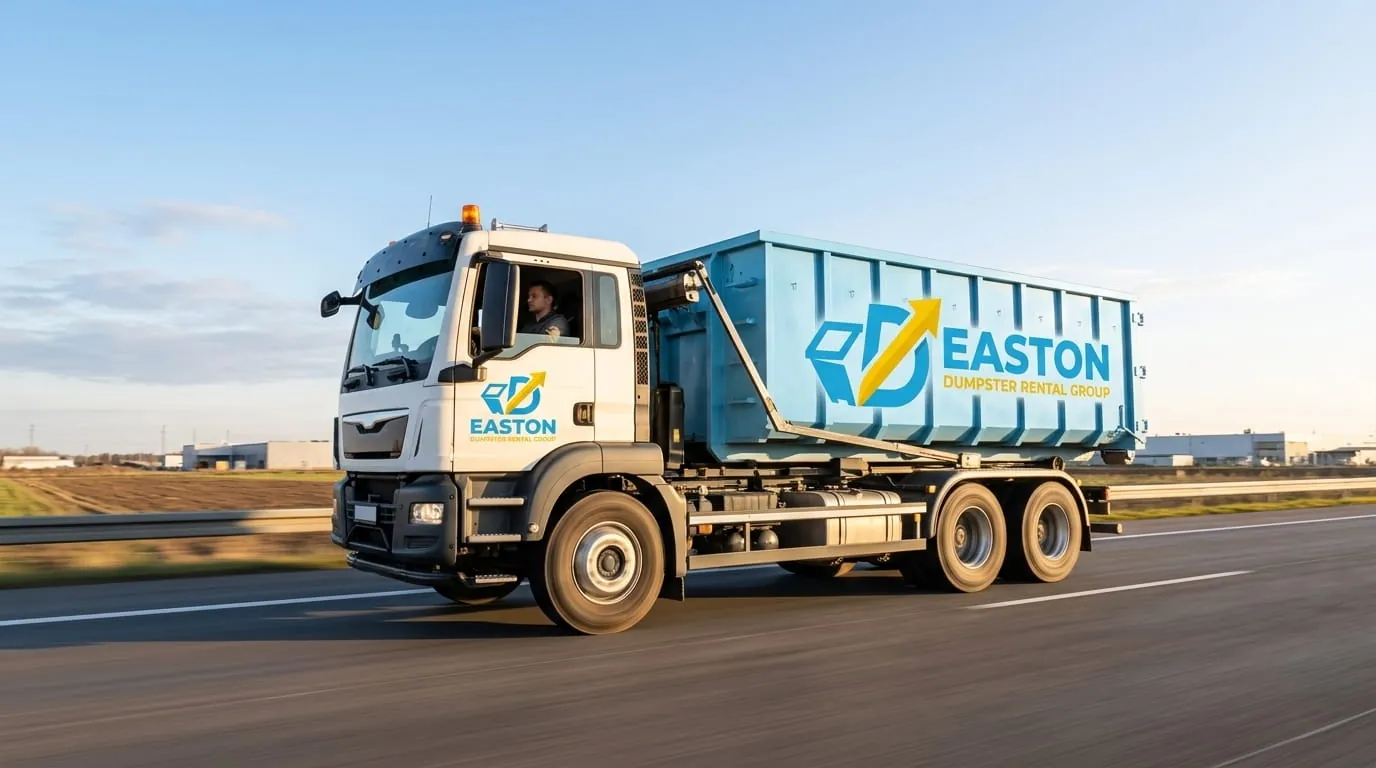
I have set a lot of dumpsters down on a lot of driveways around Easton, Palmer, Forks, and out toward the Slate Belt. And I will tell you straight: the driveway is the part of a rental most homeowners never think about until the container is already sitting there. By then you are looking at a fully loaded box of roofing shingles or busted concrete pressing down on your blacktop, and you are wondering if it is going to leave a mark. The good news is that with a little planning, it almost never has to.
This is the stuff we talk through with folks before the truck ever rolls out. Some of it is on us as the hauler. Some of it is on you. Let me walk you through how to keep your driveway looking the way it did before we showed up.
First, understand what is actually pressing on your driveway
People picture the weight of the trash. That is not really the problem. The problem is how that weight lands. A roll-off dumpster rides on two steel rails that run the length of the container. When it is loaded, all of that tonnage funnels down into a pair of narrow strips of steel and a couple of small rear wheels. You are not spreading ten thousand pounds across the whole footprint of the box. You are concentrating it along two lines maybe four inches wide.
That concentration is what leaves impressions in asphalt on a hot July afternoon, and it is what can start a hairline crack in concrete that already had a weak spot. Once you understand that the rails are the pressure points, everything else about protecting the surface makes sense.
Boards under the rails: the single best thing you can do
The oldest trick in the trade, and still the best, is putting wood down under the container before it lands. We are talking about laying planks flat on the driveway so the dumpster rails come to rest on the wood instead of directly on your surface. The board takes the load and spreads it out over a much wider area, so instead of a four-inch steel line digging in, you have got a nine or ten-inch cushion doing the work.
What we like to use:
- Two-by-tens or two-by-twelves, pressure treated. Thick enough to carry the load and wide enough to actually spread it. Thin luan or a sheet of plywood alone will just crack under the rail and do nothing.
- Full-length runs where we can. Ideally the boards run the length of the container under both rails. If we are working with shorter pieces, we set them at the front pickup point and the rear wheels, which is where the load piles up.
- Old wood is fine. This is not finish carpentry. Scrap two-by material from a job, reclaimed deck boards, anything solid works. If you have some laying in the garage, tell your hauler and set it out.
A hauler who knows the area will usually carry boards on the truck for exactly this reason. If you book a container and nobody mentions protection, that is worth a question before delivery day.
Asphalt, concrete, and pavers each behave differently
Not every driveway reacts to a dumpster the same way, and the surface you have should shape how careful you are.
Asphalt. This is the one people worry about most, and for good reason. Blacktop softens in heat. On a 90-degree Lehigh Valley summer day, fresh or dark asphalt gets pliable, and a loaded rail sitting in one spot for a week can press a groove or a dip into the surface. Newer driveways, say under a year old, are the most vulnerable because the asphalt has not fully cured and hardened. If your driveway is new, boards are not optional in my book. They are required, and we try to keep the delivery to cooler parts of the day when we can.
Concrete. Concrete is harder and handles the weight better, so surface denting is rarely the issue. Cracking is. Concrete is strong under compression but it does not like point loads over an existing crack, a control joint, or a section that was poured thin. If your slab already has cracks, the rails can widen them. We try to position the container so the rails do not land right on a joint or an existing crack line, and boards help here too by bridging over weak spots.
Pavers. Paver driveways are beautiful and they are the trickiest to protect. The concern is not one paver breaking, it is the whole field shifting. Concentrated weight can push individual pavers down into the sand base, leaving a low spot or a lip, and heavy rail pressure can crack a paver outright. On pavers we always board, we spread the load as wide as possible, and honestly, for a lot of paver driveways we suggest placing the dumpster somewhere else entirely, even if it means a slightly longer walk with the wheelbarrow.
The PA winter wildcard: freeze-thaw
Here is something a lot of out-of-town outfits do not factor in, but anybody who has worked through a few Easton winters knows cold. Our winters run through freeze-thaw cycles, sometimes several in a single week. Water works into a small crack or a seam, freezes overnight, expands, and pries the crack a little wider. Then it thaws and does it again.
Now put a heavy container on top of that. A dumpster that sits from December into January is loading your driveway during the exact season the surface is most brittle and most likely to be holding moisture in tiny fissures. A crack that a rail might have bridged harmlessly in July can propagate in January because the freeze-thaw is already working on it from the inside.
A few things help through the cold months. Keep winter rentals shorter when the project allows, so the container is not parked over the surface for weeks of repeated freeze-thaw. Board every time, no exceptions, because spreading the load matters more when the material is stressed. And clear snow and ice from the placement spot before delivery so we are setting down on a solid, visible surface instead of guessing under a layer of ice. If you are planning a winter cleanout, our residential dumpster rental crew can talk timing with you so the box is not sitting out any longer than it needs to be.
Placement tips that save your surface
Where the dumpster goes matters as much as what is under it. A few things we look at on every drop:
- Level ground. A container on a slope puts uneven load on the rails and is harder to place cleanly. Flat is always better. If your driveway pitches hard, the apron near the street or a flat pad is often the smarter spot.
- Straight approach. The truck needs a straight, clear path to back in and winch off. Sharp turning under load is when tires scuff and drag on the surface. Move the cars and clear the path before we arrive.
- Off the weak edges. The outer edges of a driveway, where the asphalt or slab meets grass or a garden bed, are the least supported and the first to crumble. We keep the container toward the center and structural part of the driveway, not riding the edge.
- Mind the overhead. Low branches and utility wires are not a driveway issue, but a truck fighting to place a box around obstacles is more likely to reposition and drag. A clear vertical path means a clean set-down.
Right-sizing the container helps too. An oversized box that mostly sits empty is still a big steel frame parked on your surface, and a container that is too small tempts you to overload it, which drives the rail pressure up. For a lot of home projects a 15 yard dumpster hits the sweet spot: enough room for a garage cleanout, a bathroom remodel, or a modest roof, without a giant footprint sitting on your driveway for a week.
Not sure where your dumpster should go or whether your driveway can take it? Call us at (484) 544-4458 and we will walk through it with you before the truck ever leaves the yard.
What a good hauler actually does
A lot of driveway damage is really just careless placement, and that is on the company, not the customer. When you hire right, here is what should happen without you having to ask:
- The driver looks at your surface, your slope, and your approach before dropping, not after.
- Boards go down under the rails as a matter of routine, especially on asphalt, pavers, or anything new.
- The container is set gently, winched down slow, not dropped or dragged into position.
- Pickup is done with the same care, easing the box up onto the rails rather than yanking it and scraping the surface.
- The driver walks the spot afterward and points out anything worth noting, honestly.
Ask a prospective hauler how they protect driveways. If the answer is a shrug or a we-are-not-responsible line in the contract, that tells you what kind of care to expect. A local outfit that plans to be renting to your neighbors next year has every reason to leave your driveway the way they found it.
Avoiding cracks and the stains people forget about
Cracks get all the attention, but stains are the damage I actually see most often, and they are almost entirely preventable. A couple of sources:
Rust. A steel container sitting on a wet driveway, or rain draining out of the box, can leave rusty streaks on concrete. Boards under the rails lift the steel off your surface and cut this down a lot. Clean containers help, which is why the condition of the box a company sends says something about how they run.
Leaks and drips. This one is on how you load. Cans of paint, stain, motor oil, solvents, and adhesives can leak inside the box and drain out the seams onto your driveway, leaving a stain that does not come out. Keep liquids out of the dumpster entirely. Most of them are not allowed anyway, and they are the number one cause of a permanent mark. Bag messy material, and if you are tossing anything that can weep, seal it up first.
On the crack side, the summary is simple: spread the load with boards, keep the rails off joints and existing cracks, do not overload, and be extra careful in winter. Do those four things and the odds of a new crack drop to almost nothing.
The bottom line for Easton and the Lehigh Valley
Protecting your driveway during a dumpster rental is not complicated, but it does take somebody paying attention. Lay boards under the rails. Match the care to your surface, blacktop, concrete, or pavers. Respect our freeze-thaw winters. Place the box on level, well-supported ground with a straight approach. Keep liquids out. And hire a hauler who treats your property like they will be back next year, because a good one plans to be.
We have been setting containers down across Easton and the surrounding towns long enough to know every driveway is a little different. If you want to talk through your specific setup before you book, reach out through our contact page or give us a call. A five-minute conversation up front beats a repair bill every time.
Founder, Easton Dumpster Rental Group — sharing straight advice from more than 15 years of local hauling experience.
Frequently Asked Questions
Will a dumpster crack or dent my driveway?
It can if it is placed carelessly, but with the right precautions it almost never does. The weight rides on two narrow steel rails, so the fix is spreading that load with pressure-treated boards under the rails, keeping the rails off existing cracks and joints, and not overloading the box. On asphalt, especially newer blacktop in summer heat, boards are essential. On concrete the main risk is widening an existing crack. Done right, your driveway comes out the way it went in.
Do I need to put boards down myself, or does the hauler bring them?
A good local hauler carries boards and puts them down as part of the delivery, especially on asphalt, pavers, or new surfaces. That said, if you have scrap two-by-ten or two-by-twelve lumber around, set it out and mention it. Thick, wide, pressure-treated boards work best. Thin plywood or luan alone will just crack under the rail and does not protect anything. If a company you are considering does not mention driveway protection, ask before delivery day.
Is it safe to keep a dumpster on my driveway through a Pennsylvania winter?
It can be, but winter needs extra care because of freeze-thaw cycles. Water works into small cracks, freezes, expands, and pries them wider, and a heavy container loads the surface during the season it is most brittle. Keep winter rentals as short as the project allows, always board under the rails, and clear snow and ice from the placement spot before delivery so the box sets on a solid, visible surface. Call us and we can time the rental so it is not sitting out any longer than needed.
What is the best spot to place a dumpster to avoid damage?
Level ground with a straight, clear approach for the truck, positioned over the center and structurally supported part of the driveway rather than the weak outer edges where it meets grass. Avoid placing rails directly over control joints or existing cracks. Clear cars and low obstacles so the driver can set the container down cleanly without turning or dragging under load. If your driveway pitches steeply or is pavers, the apron near the street or a flat pad is often the smarter choice.
How do I prevent stains on my driveway from the dumpster?
Two things cause most stains. First, rust from a steel container sitting on a wet surface, which boards under the rails largely prevent by lifting the steel off your driveway. Second, and more common, leaking liquids. Paint, stain, motor oil, solvents, and adhesives can weep out through the box seams and leave permanent marks. Keep liquids out of the dumpster entirely, seal anything that can drip, and bag messy material. Most liquids are not allowed in the container anyway.