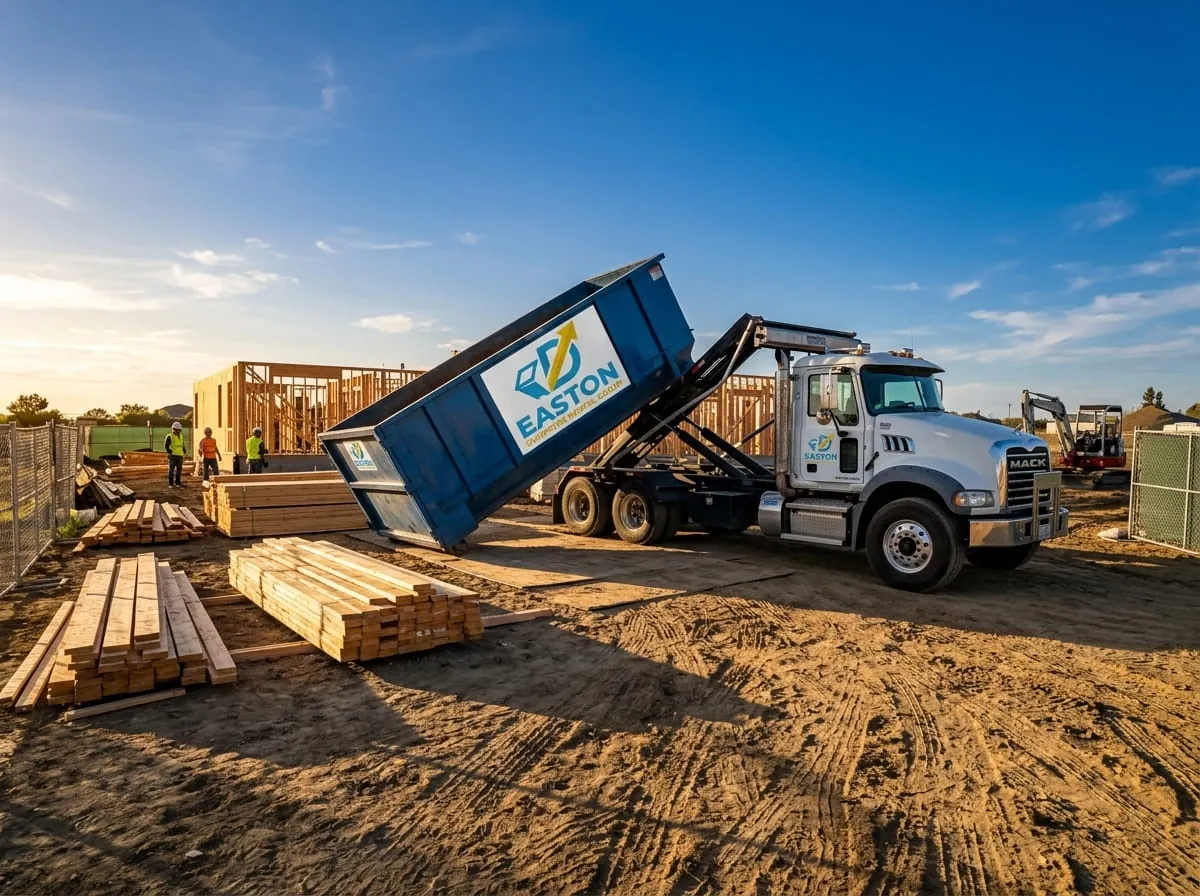
After enough years hauling roll-offs around Easton and the rest of Northampton County, you start to see a dumpster differently than most folks do. Homeowners look at that steel box and see a place to make a mess disappear. We look at it and see a sorting problem waiting to happen. Because here's the thing nobody tells you when you rent one: a good portion of what people throw in a dumpster never needed to go to a landfill at all. Metal, cardboard, clean lumber, broken-up concrete — that material has value, and there are outfits in the Lehigh Valley that want it. The trick is knowing what's worth separating and what isn't.
This guide is the conversation we'd have with you in the driveway if we had twenty minutes. It's about how debris really moves through the waste stream once it leaves your property, what gets diverted and why, and the handful of small decisions on your end that make the biggest difference. None of it is complicated. Most of it just comes down to not mixing things you shouldn't mix.
Where your debris actually goes
When a loaded roll-off leaves an Easton job site, it doesn't drive straight to a hole in the ground. Depending on what's in it, a lot of it heads to a transfer station or a construction-and-demolition (C&D) recycling facility first. At the better facilities, mixed loads get run across a sorting line — sometimes by machine, sometimes by hand, usually both. Ferrous metal gets pulled by magnets. Cardboard and clean wood get picked off. Concrete and masonry get crushed and screened for reuse as aggregate. What's genuinely trash — mixed, contaminated, unsortable — is what ends up in the landfill.
The cleaner the load, the more of it gets diverted. That's not just feel-good talk; it's economics. A dumpster full of nothing but scrap metal or nothing but clean drywall is easy to route to the right processor. A dumpster where somebody dumped a half-empty paint can on top of the cardboard just contaminated a chunk of otherwise recyclable material. So when we ask you to keep certain things separate, it's not us being fussy. It's the difference between material getting a second life and material getting buried.
What's genuinely recyclable in a roll-off
Four categories carry most of the weight, both literally and in terms of what can be diverted around here.
Metal. This is the easy one, and it's the one people leave money on the table with. Steel, aluminum, copper, cast iron, old appliances, pipe, wire, that rusted swing set — metal is endlessly recyclable and there are scrap yards throughout the Lehigh Valley that will take it. If you've got a meaningful pile of clean scrap, it's often worth setting aside rather than burying it in a mixed load. Copper and brass in particular are worth real money. Even when it goes into the dumpster, magnets and eddy-current separators at the facility will pull most of it, but you get more value keeping it clean.
Cardboard. If you're doing a renovation, you already know how much cardboard a project generates — appliance boxes, flooring packaging, fixture cartons, the works. Broken down flat and kept dry, cardboard (OCC, in the trade) is one of the most reliably recycled materials there is. Wet, greasy, or paint-splattered cardboard is a different story; contamination knocks it out. Keep it dry and it's gold.
Clean wood. Untreated, unpainted dimensional lumber — framing offcuts, pallets, plain boards — can be ground into mulch, boiler fuel, or engineered-wood feedstock. The word that matters is clean. Pressure-treated lumber, painted or stained wood, and anything with a lot of hardware mixed in usually can't go the same route, because the treatment chemicals and coatings are contaminants. If you're demoing an old deck, that's treated wood and it's handled differently than the pine studs from a wall you took down.
Concrete, brick, and block. Hardscape and masonry debris is one of the most recyclable materials in all of construction. Crushed and screened, it becomes road base and aggregate. The catch is weight — concrete is heavy, and a dumpster fills up on weight long before it fills up on volume. For that reason we often recommend a dedicated container for a clean concrete load. It keeps the material sortable and keeps you from overloading a mixed box. Just keep the rebar situation in mind; a little is fine, a lot changes how it's processed.
If you're clearing out a house rather than a job site — furniture, working appliances, usable building materials — that's a different kind of diversion, and it's worth reading up on how junk removal and cleanouts can route the still-good stuff to reuse before anything hits a container at all.
Pennsylvania rules worth knowing
A few things simply cannot go in a dumpster in Pennsylvania, and the one that trips people up most is electronics. Under the state's Covered Device Recycling Act, most consumer electronics — televisions, computers, monitors, laptops, tablets, e-readers, and their peripherals — are banned from disposal in the trash and from landfills. You cannot legally throw a TV in a roll-off. Those “covered devices” have to go to an approved electronics recycler, and there are collection options around Northampton County for exactly this. It's not a suggestion; it's law.
The same goes for a short list of other materials that never belong in a general debris container: liquid paint (dry it out or take it to a household hazardous waste event), automotive fluids, oil, solvents, pesticides, propane tanks, most batteries, tires, and anything classified as hazardous. Fluorescent tubes and CFL bulbs contain mercury and need separate handling. When in doubt, keep it out and ask. We'd much rather answer a question in advance than have a load rejected at the gate because one prohibited item was buried in it.
Regulations and accepted-materials lists change, and they vary by facility and by municipality. The rules of thumb here are solid, but for anything specific — a particular material, a collection date, a fee schedule — confirm with the City of Easton or Northampton County directly. They maintain the current, authoritative lists, and a two-minute phone call beats a wrong assumption.
Donate before you dump
Some of the best waste reduction happens before the dumpster ever shows up. If you're gutting a kitchen and the cabinets are still solid, or you're replacing a working water heater, or you've got doors, windows, light fixtures, and lumber in usable shape, those are donations, not debris. Building-material reuse centers and local charities take this kind of thing, and it keeps perfectly good material in service instead of crushed under a load of drywall.
The same applies to household cleanouts. Furniture that still has life in it, appliances that still run, tools, fixtures — there's almost always a nonprofit in the Lehigh Valley that can use them. It takes a little more effort than pitching everything, but it's the highest form of recycling there is: the item never gets processed at all, it just gets used again.
Not sure whether a pile is dumpster material or donation material? That's a fair question, and it's the kind of thing we talk through with customers all the time. A quick call to (484) 544-4458 and we can usually help you sort it out before you commit to a container size. A little planning up front changes what ends up buried.
Reducing project waste in the first place
The cheapest, greenest debris is the debris you never generate. A few habits go a long way on any renovation or build:
- Order to your measurements. Careful takeoffs and ordering close to actual need cut down on offcuts and returns. Buy what the job needs, not a comfortable cushion you'll end up tossing.
- Deconstruct instead of demolish where it makes sense. Pulling trim, doors, and cabinets carefully so they can be reused takes longer than a sledgehammer, but it turns waste into salvage.
- Keep your streams separate on site. Even a couple of extra bins — one for metal, one for cardboard — next to the roll-off makes the whole load more divertible.
- Right-size the container. Renting a box that fits the job means fewer swaps and less temptation to fill empty space with things that shouldn't go in.
We've been doing this in and around Easton long enough to have opinions on all of it, and we're happy to share them. You can read more about how we operate on our about page, but the short version is that we'd rather help you divert material than watch it get buried.
Why the rivers make this local
There's a reason responsible disposal matters more here than it might somewhere flatter and drier. Easton sits right at the confluence of the Delaware and Lehigh rivers, and the Bushkill Creek runs through town on its way to join them. We're a watershed town. What gets dumped illegally, what leaches out of an improperly handled load, what washes off a careless job site — a lot of it has a short path to running water.
That's the practical case against tossing paint, fluids, and chemicals into a debris container, or worse, into a ravine or a storm drain. It's not abstract. Those substances move through soil and groundwater and end up in the same rivers people fish, paddle, and draw water from. Keeping hazardous material out of the general waste stream, and keeping recyclables out of the landfill, is part of how a community like this one protects the water it's built around. Doing debris right and protecting the watershed turn out to be the same job.
The bottom line
Renting a dumpster and being responsible about waste aren't at odds — they're the same conversation. Keep your metal, cardboard, clean wood, and concrete separable. Never put electronics, chemicals, or hazardous material in a general container. Donate what still has life in it. Order tight, deconstruct where it pays, and right-size your container. And when the rules feel murky, check with the City of Easton or Northampton County for the specifics, because those lists are the ones that count.
If you want a hand thinking any of this through before you book — what size, what goes where, what to keep out — reach out through our contact page or just call. We'd rather set the job up right the first time.
Founder, Easton Dumpster Rental Group — sharing straight advice from more than 15 years of local hauling experience.
Frequently Asked Questions
Can I put a TV or old computer in the dumpster in Easton?
No. Under Pennsylvania's Covered Device Recycling Act, televisions, computers, monitors, laptops, and similar electronics are banned from landfills and from the trash. They have to go to an approved electronics recycler. There are e-waste collection options in Northampton County — check with the City of Easton or the county for current drop-off locations and dates.
What materials are actually recyclable out of a construction dumpster?
The big four are metal (steel, aluminum, copper, appliances), clean dry cardboard, untreated and unpainted wood, and concrete, brick, and block. At C&D recycling facilities these get sorted and diverted — metal to scrap, cardboard and clean wood to reprocessing, and masonry crushed into aggregate. The cleaner you keep each stream, the more of it gets diverted instead of landfilled.
What can't go in a roll-off dumpster?
Electronics (banned by PA law), liquid paint, automotive fluids and oil, solvents, pesticides, propane tanks, most batteries, tires, fluorescent bulbs, and anything hazardous. Dry out or properly dispose of paint, and take hazardous items to a household hazardous waste collection. When in doubt, keep it out and ask us before the load goes out.
Should I donate materials instead of throwing them away?
Whenever they're still usable, yes. Solid cabinets, working appliances, doors, windows, fixtures, lumber, and furniture can go to building-material reuse centers and local charities in the Lehigh Valley. Reuse is the best outcome there is — the item never gets processed, it just gets used again — and it keeps good material out of the landfill entirely.
Why does responsible disposal matter so much in the Easton area?
Easton sits at the confluence of the Delaware and Lehigh rivers, with the Bushkill Creek running through town, so we're a watershed community. Paint, chemicals, and fluids that get dumped improperly can move through soil and groundwater into those rivers. Keeping hazardous material out of debris containers and recyclables out of landfills is part of protecting the water the whole region depends on.