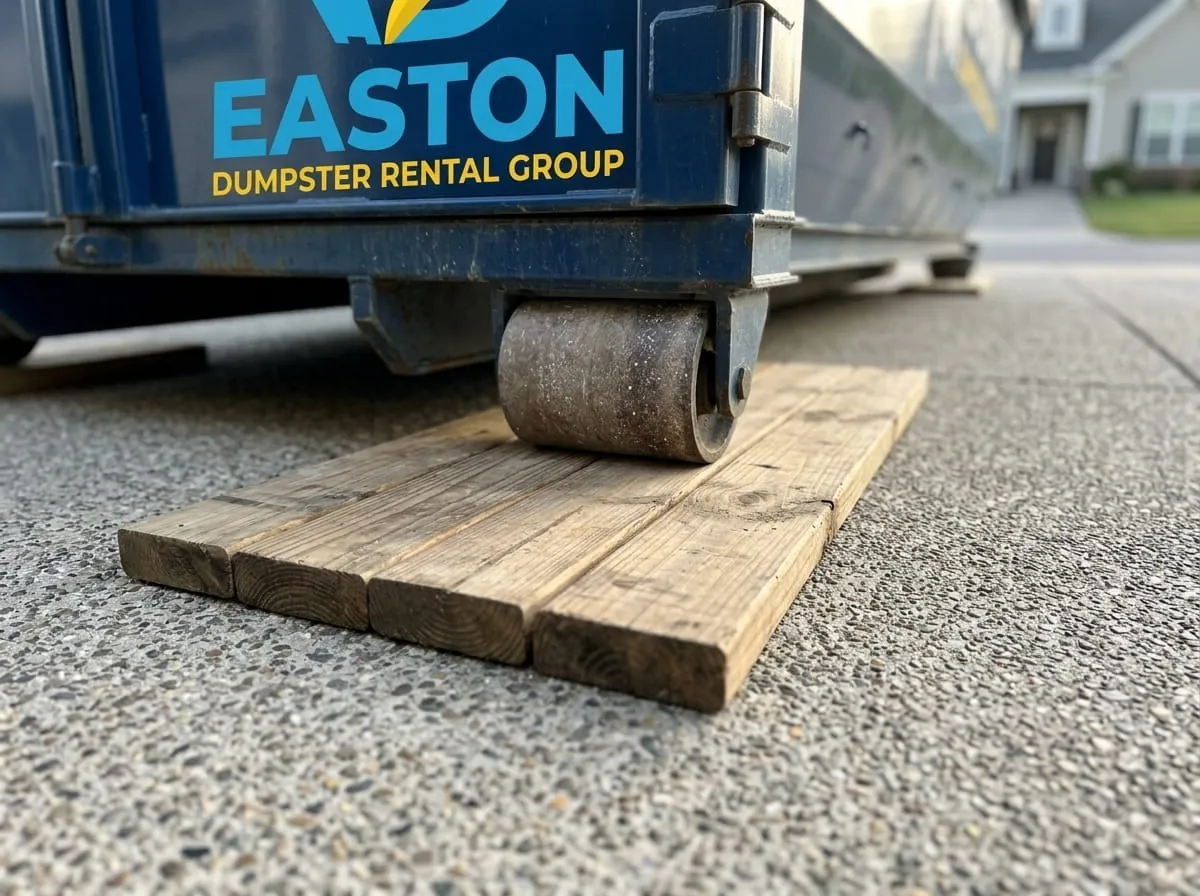
After enough years hauling roll-offs around Easton and the greater Lehigh Valley, you learn that the single biggest source of surprise fees and blown schedules isn't the size of the dumpster. It's what people put in it. Somebody tosses a couple of old tires on top of a load of drywall, or slides a water heater in without mentioning it, and suddenly a straightforward job turns into a trip to a transfer station that won't take the whole container until the wrong stuff comes out.
So let's clear it up. This is the plain-English rundown of what you can throw in a roll-off dumpster, what you absolutely can't, what needs its own dedicated bin, and how Pennsylvania's disposal rules actually play out here in Northampton County. No fine print games. Just the stuff we wish every customer knew before we dropped the box in the driveway.
What Goes In Without a Second Thought
The good news is that the vast majority of what people are trying to get rid of is completely fine. A roll-off is built for bulk, and most of a cleanout, a remodel, or a roof tear-off drops right in.
General household junk. Boxes, old toys, clothes, broken lamps, that treadmill nobody used after February, kitchenware, books, the contents of an attic or a basement that's been collecting for thirty years. If it came out of a house and it isn't on the banned list below, it goes in the box.
Furniture. Couches, mattresses, dressers, tables, bed frames, office chairs. Big, awkward, heavy furniture is one of the best reasons to rent a dumpster in the first place, because dragging it to the curb piece by piece for regular trash pickup is a losing battle. Mattresses are accepted in most cases, though a few facilities charge a small per-unit fee, so it's worth a quick heads-up if you've got a stack of them.
Construction and demolition debris. This is our bread and butter. Drywall, lumber, plaster, subfloor, cabinets, countertops, trim, siding, decking, non-asphalt roofing, tile, flooring, insulation, and general remodel wreckage all belong in a roll-off. If you're gutting a bathroom or a kitchen in a Wilson or Palmer Township home, one container usually swallows the whole demo.
Roofing shingles. Asphalt shingles are accepted, but they're deceptively heavy — a single square can run 250 to 400 pounds. A roof tear-off fills a container by weight long before it fills it by volume, so we usually recommend a dedicated size for shingle-only jobs and we'll talk tonnage with you up front.
Yard waste. Branches, brush, leaves, shrubs, sod, small tree limbs, and general storm cleanup are fine in most cases. Keep it as a clean load if you can — dirt and root balls mixed into brush push the weight up fast, and a few facilities want green waste kept separate so it can be composted rather than landfilled.
If your project is mostly a big pile of mixed household stuff and old furniture, our junk removal service is often the simplest path — we can help you figure out whether a dumpster or a full-service haul makes more sense for what you're clearing out.
What You Cannot Put in a Roll-Off — Period
Here's where the rules get firm, and for good reason. These items are banned at the transfer stations and landfills we haul to, and a lot of them are banned by state or federal law. If they show up in a load, the whole container can get rejected, and the cleanup cost lands back on the job. Every one of these has a proper disposal route — it just isn't the dumpster.
Hazardous materials. Anything corrosive, flammable, toxic, or reactive is out. That means solvents, gasoline, motor oil, antifreeze, pool chemicals, pesticides, herbicides, cleaning acids, propane tanks, and asbestos. Asbestos in particular is heavily regulated in Pennsylvania and has to be handled by a licensed abatement contractor — never bag it up and hide it in a load. If you're not sure whether something counts as hazardous, assume it does and ask.
Paint and liquids. Wet paint, stains, lacquers, and any liquid in a can can't go in. This one trips people up constantly during a cleanout. Latex paint can be dried out — leave the lid off, stir in cat litter or a paint hardener until it's solid — and once it's fully dried, the hardened material is generally acceptable. Oil-based paint is a different animal and belongs at a household hazardous waste collection. Northampton County runs periodic HHW drop-off events, and PPG and other retailers sometimes take leftover paint back. Empty, dry cans are fine.
Tires. Car and truck tires are banned from the dumpster and from landfills across the state. They trap methane and float back up through a capped landfill, which is why every facility refuses them. Most tire shops in the Easton area will take your old tires for a couple of dollars each when you're buying new ones, and the county recycling program handles them too.
Batteries. Car batteries, lithium-ion packs, and rechargeable batteries are all prohibited. Lithium batteries are a genuine fire hazard — they've started blazes in trucks and at sorting facilities — so this isn't red tape, it's real. Auto parts stores take lead-acid car batteries, usually with a small core credit, and many hardware stores have drop boxes for rechargeables.
Electronics. This is the big one in Pennsylvania, so it gets its own section below.
Appliances with refrigerant. Refrigerators, freezers, air conditioners, dehumidifiers, and heat pumps contain Freon or similar refrigerants, and federal law requires that refrigerant be professionally recovered before the unit is scrapped. You can't just chuck the fridge in the box. We can point you to a certified appliance recycler, and many scrap yards will take these units once the refrigerant is evacuated and tagged. Appliances without refrigerant — a stove, a dishwasher, a dryer — are usually fine, and they're valuable as scrap metal too.
Medical and other special waste. Sharps, prescription drugs, and biohazard material have their own required channels and never belong in a roll-off.
Pennsylvania's Electronics Ban — Know This One
Pennsylvania's Covered Device Recycling Act is one of the rules we get asked about most, because almost every household cleanout turns up an old TV or computer. Under the state law, "covered devices" — desktop and laptop computers, monitors, televisions, tablets, e-readers, and their peripherals — are banned from disposal in landfills and, by extension, from your dumpster. It has been illegal to landfill these devices in Pennsylvania since 2013, and haulers can't accept them.
That old tube TV in the basement is the classic example. They're heavy, the leaded glass is genuinely hazardous, and they are flatly not allowed in the container. The good news is that recycling them is free or nearly free through several channels. Manufacturers are required to fund collection programs, Best Buy and Staples take many devices, and Northampton County holds electronics recycling events through the year. Set the electronics aside in their own pile before we arrive, and the rest of the load moves without a hitch.
The practical takeaway: when you're sorting a house, make one corner the "electronics and hazards" corner. Anything with a plug and a screen, anything with a battery, anything that was ever a liquid — it goes in that corner, not in the box.
Not sure if your material is allowed? Call Easton Dumpster Rental Group at (484) 544-4458 and we'll tell you straight before you load a thing.
Heavy Materials That Need Their Own Bin
Some materials are perfectly legal to dispose of but are so dense that they can't ride in a standard mixed-debris container. Weight is the reason. A roll-off has a legal road weight limit, and heavy inert material hits that limit when the box looks barely a third full. Toss too much in and the truck physically can't lift it, or it's over axle weight the moment it's on the road.
The heavy hitters:
- Concrete, brick, and block. A driveway tear-out, an old patio, foundation pieces, cinder block.
- Dirt, soil, and sod. Excavation spoil and grading leftovers.
- Asphalt. Millings and broken pavement.
- Stone, gravel, and pavers.
These go in a dedicated heavy-debris container — a smaller box rated for the load, and often at a flat rate because the material is clean and recyclable. Clean concrete and dirt actually get crushed and reused rather than landfilled, which is why keeping them separate is cheaper for everyone. Mix a pile of broken concrete into a household load and you've made an expensive problem for no reason. If your project involves any of this, look at our concrete and heavy debris service and we'll size it right the first time.
A Few Things Worth Knowing Before You Load
Don't overfill. The material has to sit at or below the top rail so we can tarp it for the road. A pile heaped over the sides is a load we legally can't haul, which means a return trip. Load heavy items flat on the bottom and fill up from there.
Mixed loads are usually fine — within reason. You don't need to sort your drywall from your carpet from your old dresser. General C&D and household junk can share a box. The sorting that matters is pulling out the banned items and the heavy inert material. Get those two things right and everything else is easy.
When in doubt, call. Nobody expects you to have memorized the state disposal code. We do this every day, and a thirty-second phone call before you start loading saves a rejected container and a bad afternoon.
That's the honest version of what does and doesn't belong in a roll-off. Sort out the hazards, the electronics, and the heavy inert material, and the rest of the job is about as simple as filling a big box in your driveway. If you've got a project coming up in Easton, Bethlehem, Allentown, or anywhere across the Lehigh Valley and you're not sure which container fits — or whether a certain material is allowed — get in touch and we'll walk you through it before anything gets dropped off.
Founder, Easton Dumpster Rental Group — sharing straight advice from more than 15 years of local hauling experience.
Frequently Asked Questions
Can I put a refrigerator or freezer in a roll-off dumpster?
Not as-is. Refrigerators, freezers, and air conditioners contain Freon or similar refrigerant, and federal law requires it be professionally recovered before the unit is scrapped. Once the refrigerant is evacuated and tagged by a certified tech, the metal can be recycled. Appliances without refrigerant, like a stove or dryer, are generally fine.
Why can't I throw old TVs and computers in the dumpster in Pennsylvania?
Pennsylvania's Covered Device Recycling Act has banned televisions, computers, monitors, laptops, and tablets from landfill disposal since 2013, so haulers can't accept them in a load. Recycle them for free through manufacturer programs, retailers like Best Buy and Staples, or Northampton County electronics collection events.
What's the difference between a regular dumpster and a heavy-debris bin?
Dense inert materials like concrete, brick, dirt, asphalt, and stone hit a roll-off's legal road weight limit when the box is only about a third full. They need a smaller dedicated heavy-debris container rated for that weight. Keeping them separate is also cheaper, since clean concrete and dirt get crushed and reused instead of landfilled.
Can I put paint cans in the dumpster?
Wet paint and liquids can't go in. Latex paint can be dried solid with cat litter or a paint hardener, and once fully hardened it's generally acceptable, as are empty dry cans. Oil-based paint is hazardous waste and belongs at a household hazardous waste collection event, several of which Northampton County runs each year.
Do I need to sort my junk before it goes in the dumpster?
Only the items that matter. General construction debris, furniture, and household junk can all share one box, so there's no need to separate drywall from carpet from an old dresser. What you must pull out are prohibited items like tires, batteries, electronics, paint, and hazardous materials, plus heavy inert material like concrete that needs its own bin.