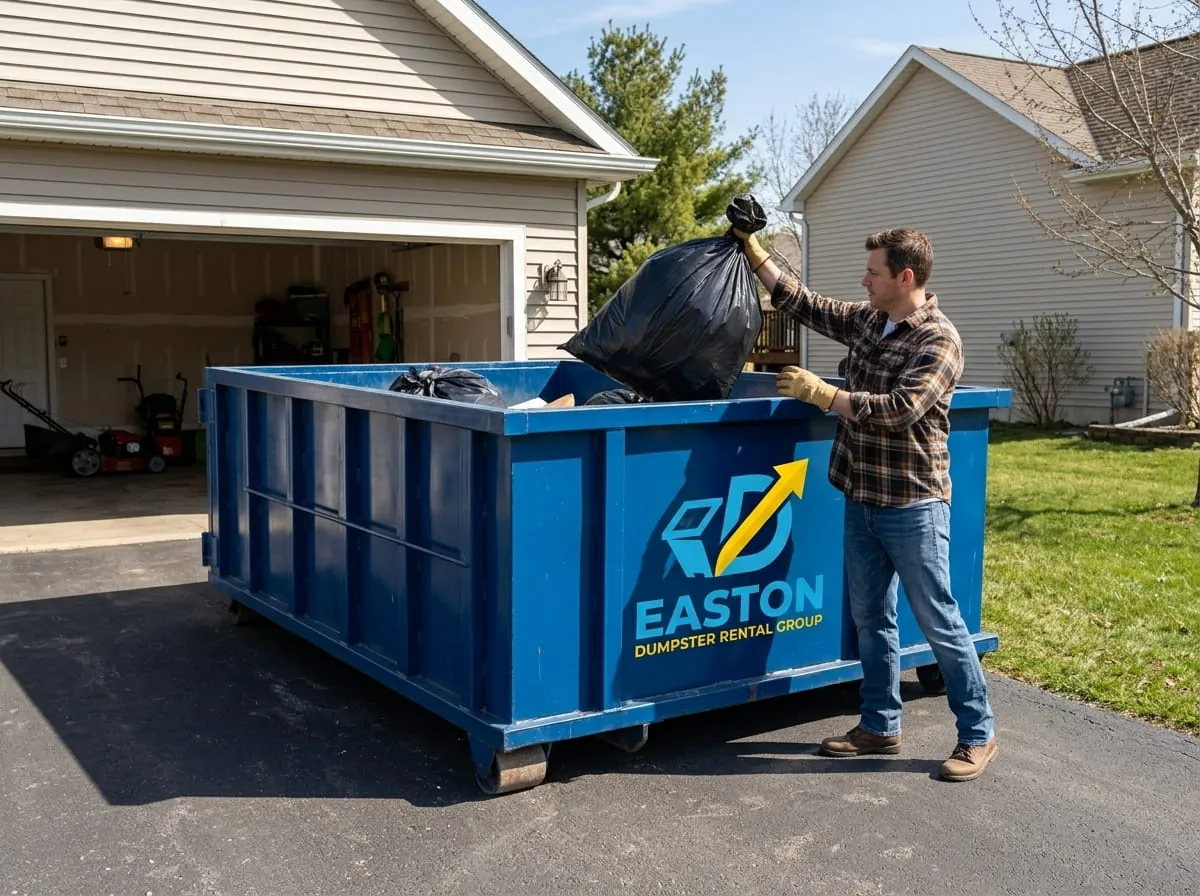
I have hauled a lot of things out of a lot of houses around Easton, Bethlehem, and Allentown, and I can tell you the cleanouts that go smoothly all have one thing in common. The homeowner had a plan before the first box got opened. The ones that turn into a two-week slog usually started with somebody standing in the middle of the garage, hands on hips, not sure where to begin. This guide is the plan I wish more folks had. Work it room by room, sort as you go, and by the weekend you will actually see the floor again.
Before you touch a single item, walk the whole house once with a notepad. You are not sorting yet. You are just taking inventory so you know what you are up against and, just as important, so you can size the right container the first time. A lot of the older homes in the Lehigh Valley have full basements and walk-up attics, and those two spaces alone can hold more than the rest of the house combined. Do not let them surprise you on day three.
The three-pile system that actually works
Everything you handle goes into one of three destinations: keep, donate or sell, and toss. That is it. The mistake people make is inventing a fourth pile called "maybe," and the maybe pile is where cleanouts go to die. If you cannot decide in ten seconds, put it in keep and move on. You can revisit keep once, at the very end, with a clearer head.
Get physical containers for each. Sturdy contractor bags for toss. Clean banker boxes for donate. And keep the keep pile small and honest. A good rule I share with clients: if you forgot you owned it, you do not need it. Around here, Goodwill and the ReStore in the area will take usable furniture and building materials, so donate is a real option, not a fantasy. What is left over, the broken and the water-stained and the mouse-chewed, is what the dumpster is for.
Start with the garage or the basement
Counterintuitive, I know. Most people want to start in a bedroom because it feels manageable. But start in your biggest holding tank instead, because that is where your staging area is going to live. Clear a corner of the garage or basement first, and that becomes the sorting hub for the whole house. Everything flows there before it goes to keep, donate, or the container out front.
Garages collect a specific kind of junk: dead paint cans, stiff garden hoses, warped plywood, that exercise bike. Pull everything to the driveway if the weather cooperates. An empty garage sorts a lot faster than a full one. Watch for the stuff that cannot go in a dumpster, and every cleanout has some: paint, motor oil, propane tanks, old car batteries, pesticides. Northampton and Lehigh County both run household hazardous waste drop-off events, so set that material aside in a box marked hazard and deal with it separately.
Basements in these older Easton homes are their own animal. Fieldstone walls, low headers, and generations of "we might need this someday." Go shelf by shelf. Damp cardboard and anything that smells musty is a toss, no debate. If you find real furniture down there, check it for rot and mold before you decide keep or donate.
The attic: budget more time than you think
Attics punish the unprepared. It is hot, the footing is bad, and half of what is up there is packed in boxes you have not opened since you moved in. Do the attic early in the day when it is cool, wear a mask because insulation and dust are no joke, and use a headlamp so both hands stay free.
Attic finds tend to fall into two buckets: sentimental and forgotten. Handle the sentimental boxes last, because they are the ones that stall you out. For everything else, be ruthless. Old textbooks, broken holiday decorations, boxes of magazines, that first apartment's dishes, none of it is coming back into rotation. Pass it straight to the driveway on a rope or a bucket brigade rather than carrying every armful down a pull-down ladder.
Bedrooms and closets
Bedrooms feel emotional but move quickly once you start. Closets first. Pull every piece of clothing out and be honest about what you have worn in the last year. Clothing that is clean and wearable goes to donate. Stained, torn, or single socks go to toss. Then hit the dressers, the under-bed bins, and the nightstands.
Furniture is the big-volume item here. An old mattress, a broken dresser, a bed frame nobody uses. Mattresses eat up a surprising amount of space in a container, so account for them when you plan. If it is just a couple of furniture pieces and not a whole-house job, sometimes a junk removal pickup makes more sense than a dumpster. For a full cleanout, though, the container almost always wins on cost.
Kitchen
Kitchens are dense. Small appliances, chipped dishes, expired pantry goods, drawers of gadgets you bought once and never touched. Work the cabinets top to bottom, then the pantry, then under the sink. That under-sink cabinet is another hazard zone; cleaning chemicals do not belong in the dumpster either.
Donate the working small appliances and the unopened, unexpired food to a local pantry. Toss the rest. If you are renovating and pulling cabinets or countertops, that construction debris is heavy, and weight matters more than volume for that kind of material, so keep it in its own pile.
Sizing the dumpster so you only rent once
This is the question I get more than any other, and the honest answer is that most people underestimate. For a single room or a light garage tidy, a 10 or 15 yard container does the job. But a true whole-home cleanout, the kind where you are clearing an attic and a basement and hauling out furniture, almost always needs more room than folks expect.
For the average Lehigh Valley cleanout, a 20 yard dumpster is the sweet spot. It holds roughly eight to ten pickup truck loads, handles bulky furniture, and its lower walls make it easier to toss heavy items over the side rather than heaving them up high. If you are clearing a large multi-generational home with a packed full basement, step up a size. Renting once is always cheaper than renting twice, and a container that is slightly too big beats one that fills up with the attic still full.
Not sure which size fits your house? Call me at (484) 544-4458 and describe the rooms. I have loaded enough of these to size it over the phone in about two minutes, and I would rather get it right than watch you pay for a second haul.
Staging: where the container goes and how to load it
Placement matters. Put the dumpster as close to your main exit as the driveway allows, because every extra step you carry a load adds up over a weekend. If you have a walk-up basement or an attic on the far side of the house, stage a pile near the door and load in batches instead of making one trip per item.
Load heavy and flat first: broken furniture laid down, lumber, drywall on the bottom. Then fill the gaps with boxes and bags. Break down what you can, because an intact bookshelf wastes the space three collapsed ones would use. Keep the load level with the top rail. An overloaded container that is mounded over the sides cannot be legally or safely hauled, and that turns into a delay nobody wants.
Older Lehigh Valley homes have their own quirks
If you are working on one of the century-plus houses in Easton's College Hill or the older neighborhoods in Bethlehem, plan for a few things the newer builds do not have. Narrow stairwells and tight door frames mean big furniture may need to come apart before it comes out. Coal chutes and old cisterns turn up in basements and sometimes hide more junk than you expect. And the sheer square footage of a full-height attic over a big old house means the volume up there can double your estimate.
These homes also tend to have real plaster, cast iron, and old-growth lumber if you are pulling anything structural, and that material is heavy. Weight fills a container faster than volume does, so keep demolition debris separate from the light household stuff and tell me about it when we talk size. It changes the math.
Sell, donate, or just let it go
Some folks want to sell the good pieces, and if you have the time, a marketplace listing or a yard sale can put a little money back in your pocket. My honest advice, though: put a hard deadline on it. Anything that has not sold by cleanout day goes to donate or toss. A cleanout that waits on a Facebook buyer who never shows up is a cleanout that never finishes. The goal is an empty, clean house, not top dollar on a used end table.
A realistic timeline
A motivated household can clear a typical three-bedroom Easton home in a long weekend if the container is on site and the sorting system is set up. Give the attic and basement each their own half-day. Do not try to do it all in one marathon push; you will get sloppy and start throwing keep items into toss out of exhaustion. Steady beats frantic every time.
When you are ready to line up a container, or you just want a second opinion on size and timing, reach out and we will get you set. Local drop-off, local pickup, and a straight answer about what fits.
Founder, Easton Dumpster Rental Group — sharing straight advice from more than 15 years of local hauling experience.
Frequently Asked Questions
What size dumpster do I need for a whole-house cleanout?
For most whole-home cleanouts in the Lehigh Valley, a 20 yard dumpster is the right call. It handles furniture, boxes, and general household junk with room to spare. If you are clearing a large older home with a full walk-up attic and a packed basement, step up to a larger size so you only have to rent once.
What can't I put in the dumpster?
Household hazardous materials are the big ones: paint, motor oil, propane tanks, car batteries, pesticides, and pool chemicals. Tires and certain electronics are usually restricted too. Northampton and Lehigh County run household hazardous waste drop-off events for that material. Set those items aside in a marked box and we will point you to the right drop-off.
How long does a full home cleanout take?
A motivated household can clear a typical three-bedroom home in a long weekend once the container is on site and the keep, donate, and toss system is set up. Budget a half-day each for the attic and the basement, since those spaces usually hold the most and take the longest.
Should I rent a dumpster or use junk removal?
If you have just a few furniture pieces or a single-room job, a junk removal pickup can be simpler and cheaper. For a full cleanout where you are clearing multiple rooms plus an attic and basement, a dumpster on site almost always wins on cost because you load on your own schedule over several days.
How do I keep the cleanout from stalling out?
Skip the maybe pile. Every item goes to keep, donate, or toss, and if you cannot decide in ten seconds, default to keep and move on. Save sentimental boxes for the very end, work one room at a time, and set up a single staging area in the garage or basement so everything flows to one spot before it leaves the house.